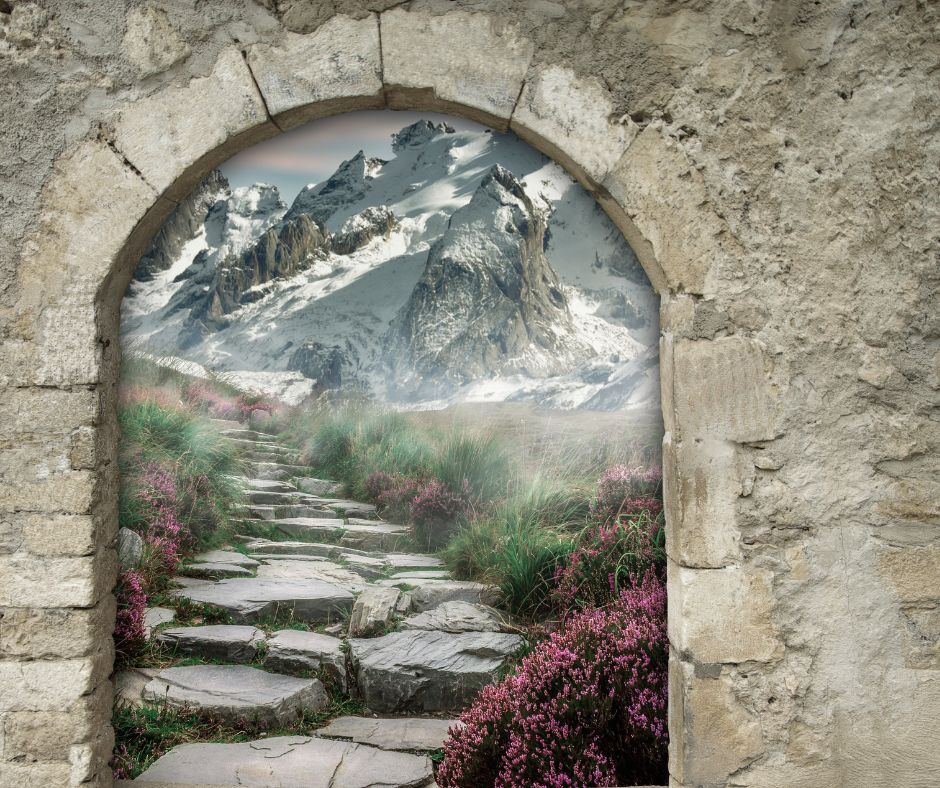
Many authors, especially those who write Fantasy or Sci-fi, build stories around people and places that don’t exist in real time. Skillful execution can make characters and settings “feel real” to readers. For example, Lord of the Rings fans become familiar with Middle-earth, although it is a fictitious world.
J.R.R. Tolkien created a fictitious world that is supposed to be a pre-historical time and place of the real earth. The author used geographical features, such as rolling hills and mountains, that exist in the real world, so that readers would be able to relate to Middle-earth and its inhabitants.
Use real-world features to help create a fictitious world
George R.R. Martin, author of Game of Thrones, created a fictitious world comprised of various kingdoms and empires based off real-world places like Asia, United Kingdom, ancient Rome, and more. In addition to geographical features and kingdoms, you can build a fictitious world that is relatable and believable by implementing these tips:
- If there are religions in your story, incorporate rituals or ideologies that align with religions in the real world.
- Base technology, events and “international” relationships off specific eras in real-world history.
- Consider doing the opposite of the real-world, such as making occupations that are” blue collar” in real time be highly valued in your fictitious world.
- Use symbolism and archetypes to make situations and characters in a fictitious world familiar to your readers.
An example of the latter would be the characters in George Orwell’s Animal Farm, most of whom represented major world leaders of the real-world era at the time.
Begin your story in your world’s most exciting place in time
To make a fictitious world believable to readers, you must first develop its history. Many details of this history will remain undivulged throughout the story. However, as the author, you must “know your world” if you expect readers to believe that it exists, in a fictitious way, of course.
Determine which era of your fictitious world is most exciting and begin your story there. If current events will enthrall readers more than prior happenings, then open the first chapter in the story’s current time. If, however, what came before the current time is the “meat and potatoes” of the novel, then take readers back in time at the start of the book.
Will there be a sequel?
If you plan to keep the story going by writing a sequel or as part of a series, be prepared to create the future of your fictitious world. Think ahead to how much time will have lapsed between the first book and the last. How will your world, its inhabitants, and its locations, topography, etc. change? The more time and effort you put into the creation phase (before you write the story) the more real your fictitious world will feel to readers.